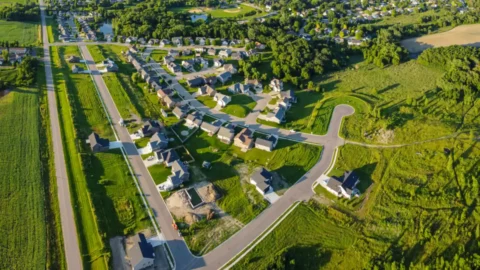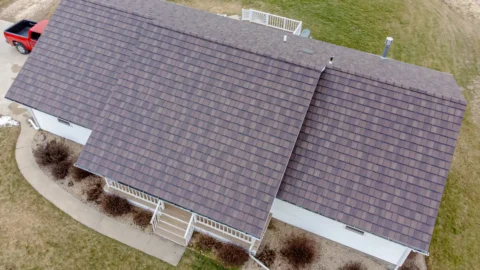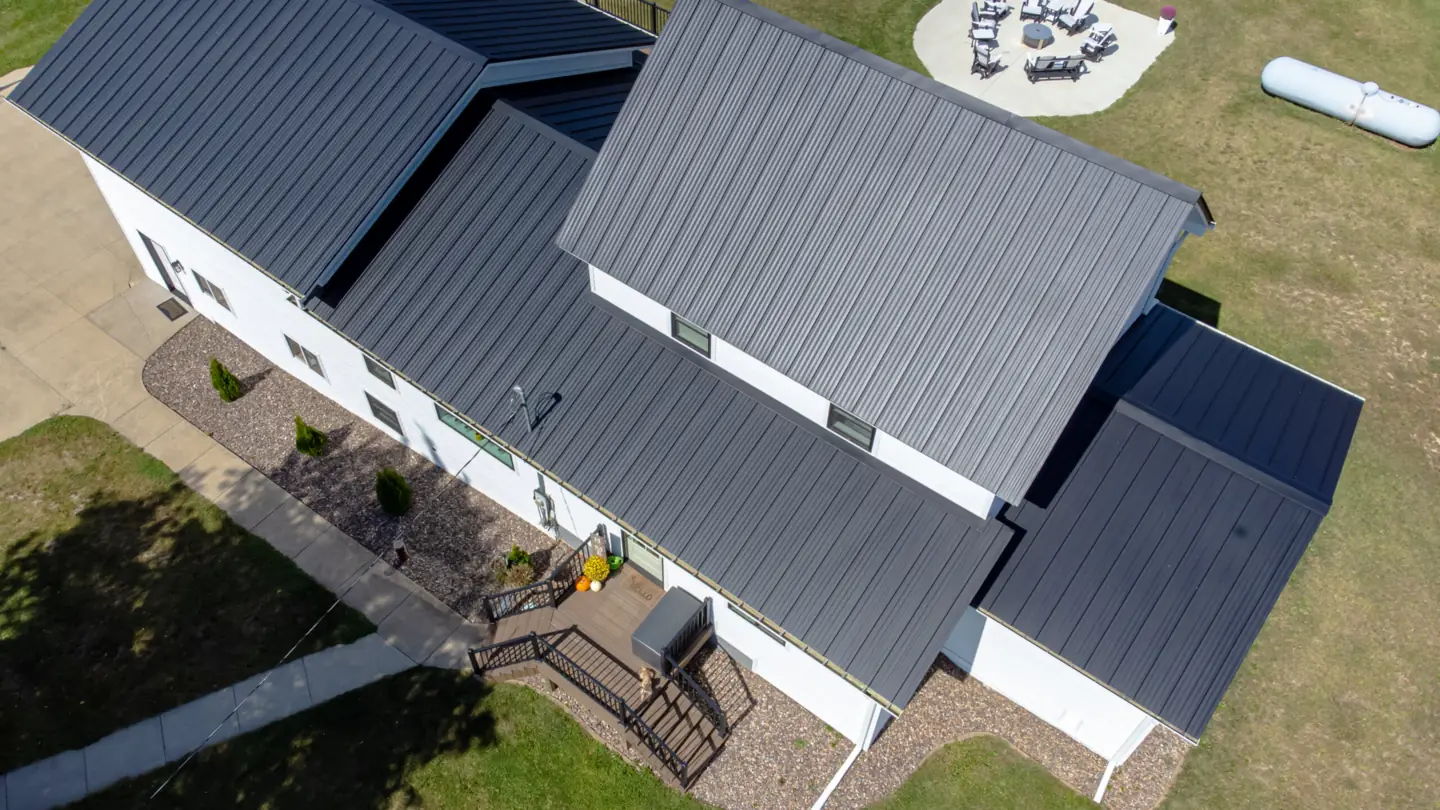
From the air, the roof, the driveway and the yard fill most of the frame. Things you’d never notice from the front walk, like a tarp on the shed, a hose across the lawn or a car in the driveway, suddenly stand out.
The good news is that most of the fixes are simple, and many of them are the same things you’d do for ground photos anyway. This checklist is for homeowners selling on their own and for agents preparing a listing.
Why aerials need their own prep
Ground photos are framed close, so you can hide clutter just outside the shot. Aerials take in the whole property at once: the roof, both side yards, the back fence and the driveway. An overhead view also flattens everything, so stray objects on the lawn or the roof read as clutter rather than depth.
Two areas matter most:
- The roof. It’s often the largest single surface in an aerial photo.
- Anything flat and open. Driveways, patios, decks, pools and lawns show every object sitting on them.
A week before the shoot
- Trim and plan the mow. Trim hedges and clear fallen leaves and branches, and plan to mow a day or two before the shoot.
- Clean the gutters and roof surface. Leaves, branches and moss are easy to spot from above. Hire a professional for anything on the roof. Please don’t climb up yourself.
- Remove the eyesores. Take down old tarps, unused satellite dishes and broken decorations, and clear debris piles, dead plants and broken fence panels where you can.
- Check community rules. If you’re in an HOA, condo or gated community, ask whether there are rules about drones taking off or landing on common areas. An HOA doesn’t control the airspace, but it can often control its own ground.
- Ask where the photos will be used. Your agent will know whether the MLS requires unbranded media and which sizes are needed.
The day before
- Mow and edge the lawn, if you haven’t already, so it looks fresh but not scalped.
- Clean the pool and remove the cover. Skim the surface and clear the deck around it.
- Set the patio. Arrange outdoor furniture neatly and close umbrellas. From above, an open umbrella hides the table and most of the patio.
- Put things away. Toys, hoses, ladders, tools and garden clutter all show up clearly from above.
- Hide the bins. Move trash and recycling bins out of sight, such as into the garage or behind a side fence.
- Turn off the sprinklers. Dry pavement looks cleaner, and a wet lawn can look patchy.
The morning of the shoot
- Clear the driveway. Move cars off the driveway and, if you can, away from the street in front of the house.
- Close up. Shut garage doors and gates.
- Bring pets inside. It’s calmer for them and keeps them out of the frame.
- Tell the neighbors. A quick heads-up is courteous, and it’s one of the voluntary privacy practices recommended for drone operators. The NTIA’s own example is a real estate professional letting the seller, and possibly the immediate neighbors, know about a planned flight.
- Make access easy. Unlock any gate the pilot needs, and make sure there’s a clear spot for takeoff and landing that you’re happy to have used.
Timing and light
Most homes photograph best with the sun behind the camera on the front of the house. That means the right time of day depends on which way the home faces. Your pilot should suggest a time window when you confirm the date.
Twilight aerials take extra planning. Under the FAA’s Part 107 rules, a drone flying during civil twilight or at night must carry anti-collision lighting visible for at least 3 statute miles, and night flight also requires the pilot to have completed updated FAA training. If you want dusk shots, ask early so your pilot can tell you what’s possible.
Weather and backup dates
The weather, not the calendar, makes the final call. FAA rules require at least 3 statute miles of visibility and minimum distances from clouds, and the pilot must check the weather before every flight. Beyond the legal minimums, wind, rain and flat gray light all affect the result.
Two habits make this painless:
- Pick a backup date when you book the shoot.
- Leave a little slack between the shoot and the day your listing goes live.
What to tell your pilot
The more your pilot knows, the better the photos. Share:
- Features to highlight: a view, water frontage, acreage, a new roof, an outdoor kitchen, a nearby park or trail.
- Things to keep out of frame: a neighbor’s pool or yard, security cameras, or anything you’d rather not publish.
- Where the images will go: MLS, website, social media or print, and whether you need unbranded versions.
- Practical details: who will be home, any pets, gate access and parking. Keep gate codes and alarm codes out of web forms, and share them directly if the pilot needs them.
- Your deadline: the date the listing goes live.
After the shoot
Aerial listing photos are commonly delivered as edited JPEGs in full-resolution and web or MLS sizes. Video usually comes as an MP4 file, often in both branded and unbranded versions.
When your files arrive:
- Look at them on the device you’ll use to publish them.
- Check that the MLS and web sizes are what your listing platform expects.
- Confirm that the usage terms cover every place you plan to share them.
Quick checklist
A week before
- Hedges trimmed, leaves and branches cleared
- Gutters and roof surface cleared (by a professional)
- Tarps, old dishes and debris removed
- HOA or community rules checked
- MLS media requirements confirmed
The day before
- Lawn mowed and edged
- Pool cleaned and cover off
- Patio furniture set, umbrellas closed
- Toys, hoses, ladders and tools put away
- Trash and recycling bins out of sight
- Sprinklers off
The morning of
- Cars moved off the driveway and street frontage
- Garage doors and gates closed
- Pets indoors
- Neighbors given a heads-up
- Gate unlocked and takeoff spot clear
Getting a listing ready? See our real estate drone photography service, or request a quote and tell us your listing date.
Sources
- 14 CFR 107.29, Operation at night and during civil twilight (eCFR)
- 14 CFR 107.49, Preflight familiarization, inspection, and actions for aircraft operation (eCFR)
- 14 CFR 107.51, Operating limitations for small unmanned aircraft (eCFR)
- FAA and DOT, State and Local Regulation of Unmanned Aircraft Systems (UAS) Fact Sheet
- NTIA, Voluntary Best Practices for UAS Privacy, Transparency, and Accountability (2016)