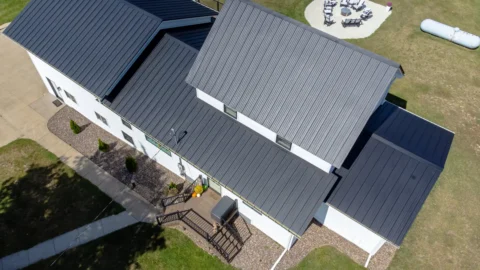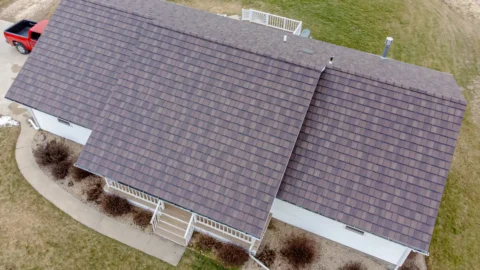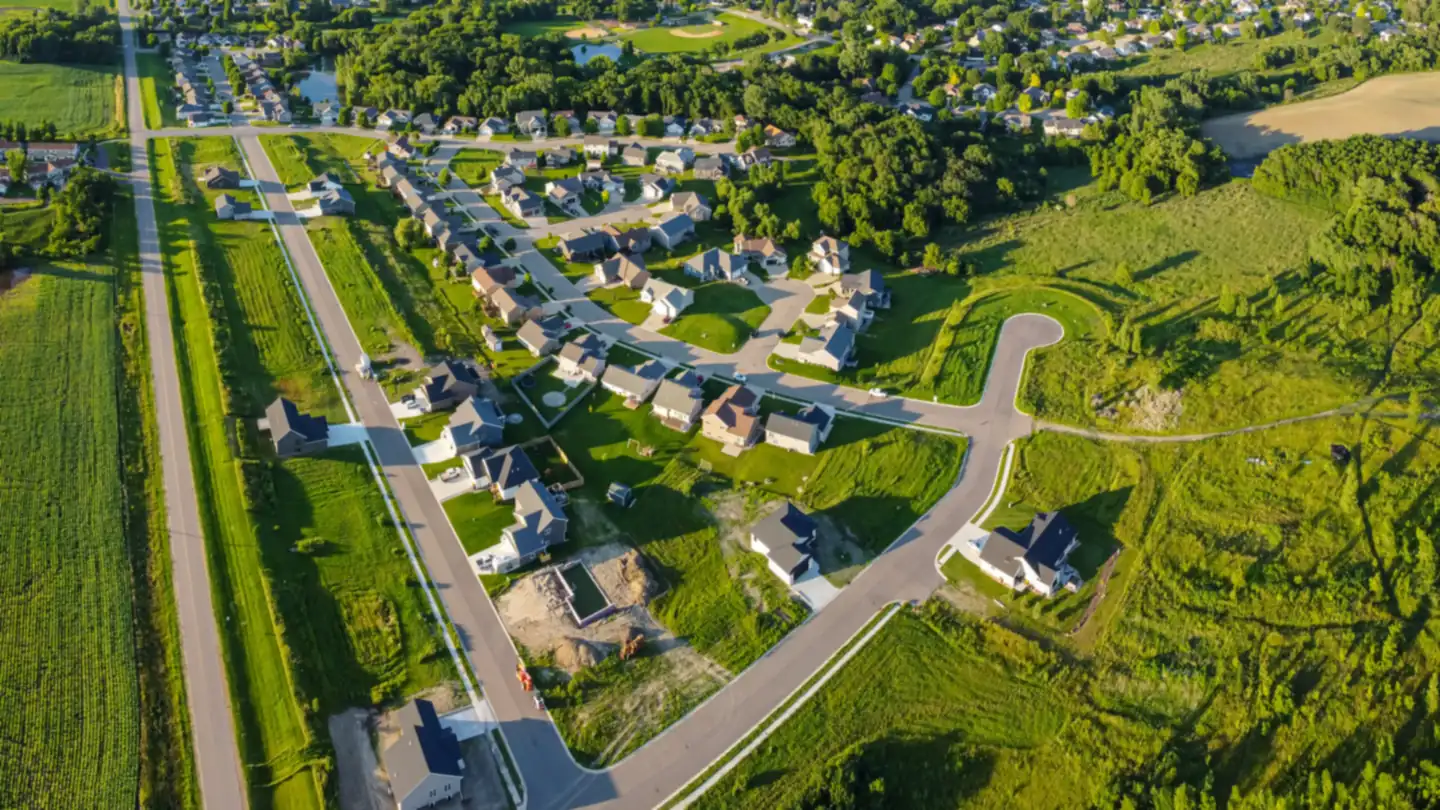
Aerial photos are now a normal part of selling a home, repairing a roof or planning a project. So whether you’re hiring a drone operator or you’ve just noticed one overhead, it’s fair to ask: who decides where a drone can fly, and what it can record?
The answer is split between federal rules for the airspace and state and local rules for what happens on the ground. Here’s how the pieces fit together.
The short answer
The Federal Aviation Administration (FAA) regulates aviation safety and the use of the airspace, including at low altitudes over your roof. Federal rules don’t require a drone pilot to get permission from every property owner under a flight path.
The FAA doesn’t regulate privacy, though. States and cities can set rules on privacy, trespass, harassment and where drones take off and land, and many have. So in practice, a drone may often be allowed to pass over private property, but what it records, how long it lingers and where it launches from are shaped by other laws, and by good manners.
Who regulates what
According to the FAA’s fact sheet on state and local drone regulation, the FAA is responsible for aviation safety and the efficient use of the airspace. That covers where and how high drones fly, how pilots are certified and when a flight needs authorization near an airport.
State and local governments can generally regulate outside that lane, including:
- privacy, voyeurism and harassment
- trespass
- land use, including where drones may take off and land
- how their own police and agencies use drones
The same fact sheet notes that local laws restricting drone flights in the “immediate reaches” of a property may be allowed where the flights substantially interfere with the owner’s use and enjoyment of it. The details vary a lot from place to place. It also notes that, as of its 2023 update, at least 44 states had passed drone laws since 2013, on topics ranging from privacy to law enforcement use; the National Conference of State Legislatures tracks newer laws.
What a commercial pilot has to do
Anyone flying a drone for business, including a real estate shoot or a roof photo job, generally must follow the FAA’s Part 107 rules. In plain terms:
- Pilot certification. The pilot in command holds an FAA Remote Pilot Certificate, and anyone else at the controls works under that pilot’s direct supervision. For most people, earning a certificate takes an FAA knowledge test and a TSA security check (current crewed-aircraft pilots can take an FAA online course instead of the test), and pilots must complete recurrent training every 24 calendar months.
- Registration and Remote ID. The drone is registered with the FAA, marked with its registration number and broadcasts Remote ID, a signal that works like a digital license plate.
- Altitude and line of sight. The drone generally stays at or below 400 feet above the ground and within the unaided sight of the pilot or a visual observer.
- Airspace permission. Near many airports, the pilot needs FAA authorization before flying. Many locations can be approved quickly through the FAA’s LAANC system, while others need a manual review.
- People and vehicles on the ground. Drones may not fly over people who aren’t directly participating in the operation, or over moving vehicles, except in limited situations the rules define. People being photographed don’t count as participants.
- Preflight checks. Before every flight, the pilot must assess the weather, the airspace and any flight restrictions, and the people, property and hazards on the ground.
The pilot in command is directly responsible for the flight and has the final say on whether it happens.
State rules can add more. A few states have their own requirements for commercial drone operators, such as a state license, state aircraft registration or proof of insurance. Minnesota is one example.
Places drones often can’t fly
Even a fully compliant commercial pilot can’t fly everywhere. Common no-go or permission-first areas include:
- Controlled airspace near many airports, without FAA authorization.
- Temporary flight restrictions (TFRs) for wildfires, VIP visits, emergencies and other events. These can appear on short notice, so pilots check before every flight.
- Major sporting events. Drones are prohibited within 3 nautical miles of stadiums with 30,000 or more seats during Major League Baseball, NFL and NCAA Division I football games, and at major auto races, from one hour before until one hour after the event.
- Prohibited areas and security-sensitive sites, such as some military bases and landmarks, and the Washington, DC, area, where flying a drone within 15 miles of Ronald Reagan Washington National Airport is prohibited without specific FAA and TSA authorization, and a wider 30-mile zone has its own rules.
- National parks. National Park Service policy prohibits launching, landing or operating drones on park lands and waters, with a few exceptions. Many state, county and city parks have their own rules.
Neighbors and privacy
Because privacy law is mostly state and local, there’s no single national answer to “Can a drone photograph my backyard?” What does exist is a set of voluntary best practices for drone operators, published by the National Telecommunications and Information Administration (NTIA). Among other things, they recommend that operators:
- give notice in advance, where practical, of when and where they’ll be collecting data
- avoid intentionally collecting identifying information where people reasonably expect privacy, unless there’s a compelling need or the people involved consent
- where practical, make a reasonable effort to minimize flights over or within private property without the owner’s consent
- avoid persistent surveillance
- keep data only as long as needed, protect it, and give people an easy way to raise privacy concerns
The NTIA even uses real estate as an example: a real estate professional might let the seller, and possibly the immediate neighbors, know about a planned flight.
At Drew’s Drone Services, we frame shots on the property we’ve been hired to photograph, avoid lingering over neighboring homes and yards, and suggest a heads-up to the neighbors when it makes sense.
HOAs, venues and shared spaces
A homeowners association doesn’t control the airspace, but it can usually set rules for its own property, such as whether drones may take off or land on common areas. Condo boards, venues, business parks and park departments work the same way. If you’re planning a shoot in a community with rules, check them first and share them with your pilot.
Hiring a drone operator? Questions worth asking
Whoever you hire, these questions will tell you a lot:
- Do you hold an FAA Remote Pilot Certificate?
- How do you check the airspace, and how do you get authorization near airports?
- What happens if weather or a flight restriction cancels the flight?
- Do you carry insurance, and can you provide a certificate if my project requires one?
- How do you handle neighbors and privacy?
- What exactly will I receive, and how am I allowed to use it?
Ask any operator these questions, including us. We’ll answer each one in writing with your quote.
If a drone is causing a problem
If a drone crashes on your property or hurts someone, the FAA’s advice is to call local law enforcement. That’s also a sensible first step for privacy or harassment concerns, since those are governed by state and local law. Remote ID also helps: the FAA and authorized law enforcement can use it to look up who a drone is registered to.
The bottom line
The FAA decides where drones can fly and how pilots must operate. Your state and town decide much of what happens on the ground, from privacy to takeoff spots. A considerate operator respects both, and focuses on the property they were hired to photograph.
This article is general information, not legal advice. Rules change, and state and local laws vary.
Planning aerial photos of your property? Request a quote, or email drew@drewsdrone.services with your questions.
Sources
- 14 CFR Part 107, Small Unmanned Aircraft Systems (eCFR)
- FAA and DOT, State and Local Regulation of Unmanned Aircraft Systems (UAS) Fact Sheet
- FAA, Become a Certificated Remote Pilot
- FAA, Remote Identification of Drones
- FAA, DiSCVR Tool (who can look up Remote ID registration)
- FAA, How to Register Your Drone
- FAA, Part 107 Airspace Authorizations
- FAA, Operations Over People General Overview
- FAA, Temporary Flight Restrictions
- FAA, Stadiums and Sporting Events
- FAA, Sporting Event Temporary Flight Restriction (FDC NOTAM 4/3621) handout
- FAA, DC Area Prohibited and Restricted Airspace
- National Park Service, Uncrewed Aircraft in the National Parks
- NTIA, Voluntary Best Practices for UAS Privacy, Transparency, and Accountability (2016)
- National Conference of State Legislatures, Current Unmanned Aircraft State Law Landscape
- Minnesota Department of Transportation, Commercial drone operations
- FAA FAQ, If someone’s drone crashes in my yard, hurts someone or damages my property, what do I do?